
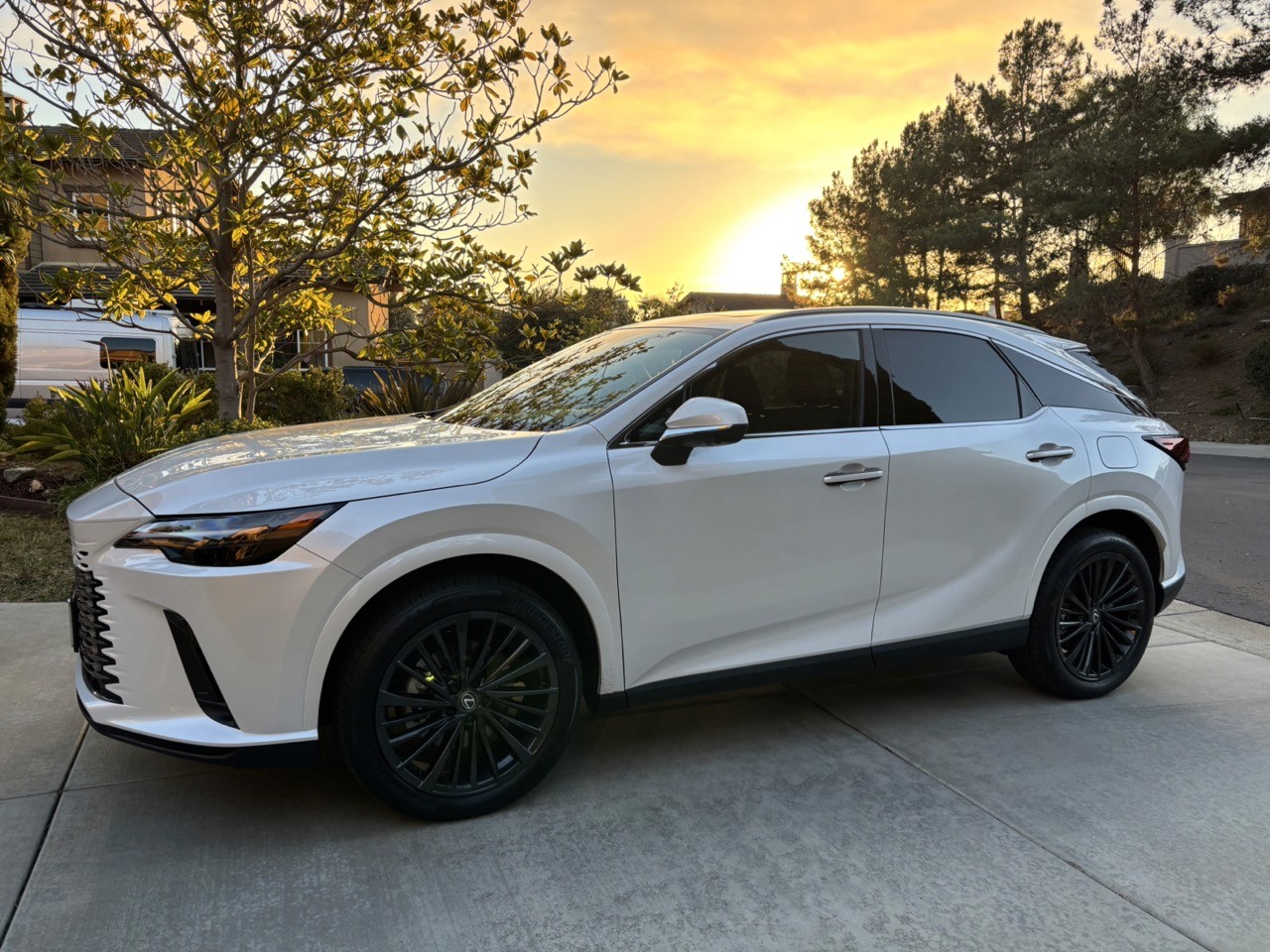
Buying or Leasing a Lexus in California
Lexus runs the tightest inventory and lowest incentive spend in the luxury segment. Knowing where pricing latitude actually exists changes the transaction.
Schedule a Consultation
Brand intelligence
Lexus value depends on trim discipline
Lexus operates at roughly one-third of industry-average days' supply, with the lowest incentive spend among full-line luxury brands. Toyota's MAAP policy prevents dealers from advertising or selling below MSRP, and Lexus Financial Services withholds lease support from its highest-demand models. On RX and NX hybrids in California, some dealers have operated with under three days' supply.
That structure narrows the traditional price negotiation. The real latitude on a Lexus deal is in accessories, protection products, financing terms, and trade-in handling. CarOracle evaluates the full transaction, not just the sticker, and identifies whether a different trim or powertrain delivers the same ownership experience at a better total cost.
Popular Lexus models
Lexus models worth comparing before you visit the showroom




Popular Lexus models
Lexus models worth comparing before you visit the showroom
Buying a Lexus
Buying makes the most sense for Lexus drivers planning to hold a vehicle four or Buying makes the most sense for drivers planning to hold a vehicle four or more years. Lexus reliability and lower maintenance costs support that horizon well.
In California, sales tax on a purchase applies to the full vehicle price upfront. On a lease, it applies to the monthly payment. In higher-tax areas, parts of Los Angeles County reach 10% or more, and that difference is a real input in the lease vs. buy calculation. It matters most for drivers who plan to upgrade every three to four years and would face that tax exposure again on the next vehicle. For a seven or eight-year hold, it carries less weight.
On models where lease support is limited, including the GX 550 and LX 600, purchase is typically the better structure. CarOracle evaluates both before recommending a path.
Leasing a Lexus
Lexus leases on the strength of residuals, not incentives. The brand holds its value well, and that naturally produces favorable residual percentages that make lease payments competitive without requiring LFS to paper over the deal with heavy lease cash or subvented money factors.
Low inventory reinforces that position. Lexus has little pressure to manufacture lease appeal artificially when demand consistently exceeds supply. A Lexus lease can pencil well even in the absence of a notable incentive event, but the math depends on the specific model and what LFS is supporting in a given month.
CarOracle checks the current program sheet before making a recommendation. Some models attract LFS support more consistently than others, and the difference between a competitive lease and a mediocre one on the same vehicle often comes down to trim and timing.
FAQs
Is it better to buy or lease a Lexus?

For California buyers, the answer comes down to three variables: annual mileage, how often you want to upgrade, and what Lexus Financial Services is currently supporting on a given model.
Buying tends to make more sense when you drive more than 15,000 miles per year, plan to hold the vehicle five or more years, or want to modify it. Lexus's long-term ownership economics are favorable. The brand ranked first among all automotive brands in the J.D. Power 2025 U.S. Vehicle Dependability Study, scoring 140 problems per 100 vehicles against an industry average of 202. That dependability record lowers the risk that ownership costs compound over time.
Leasing makes more sense when Lexus Financial Services is actively supporting a model with a competitive residual value and money factor. Those two variables, set monthly by LFS and not negotiable at the dealer level, determine the actual cost of a lease more than any other factor. When LFS supports a model, a lease payment is typically lower than financing the purchase. Experian's Q4 2025 State of the Automotive Finance Market reported an average new vehicle lease payment of $613 per month versus $767 for a financed purchase.
For a full breakdown of the tradeoffs, including California's tax treatment of leases, see CarOracle's lease vs. buy guide for California or learn how CarOracle's auto leasing program works for buyers evaluating both options.
Does Lexus have a minimum advertised price policy?
Yes. Toyota's Minimum Advertised and Actual Price (MAAP) policy prevents dealers from advertising or selling vehicles below MSRP. Unlike brands with heavier incentive spend, Lexus pricing does not respond to the same below-sticker negotiation pressure. The real latitude on a Lexus deal is in accessories, protection products, financing terms, and trade-in handling.
A California-licensed auto broker with current knowledge of dealer inventory and incentive structure can help identify which of those variables are workable on a specific deal before you enter the showroom. See how CarOracle's auto buying program works.
Are Lexus hybrid models worth comparing separately?
Yes. California's persistently high gas prices drive hybrid demand in ways that don't apply equally in other states. That demand supports stronger residual values on Lexus hybrids, which affects both resale and lease economics.
For some buyers, the gas model is worth running the numbers on directly. The purchase price gap between a hybrid and its gas equivalent can be meaningful, and depending on annual mileage and local fuel costs, the cash savings at purchase may outweigh the fuel savings over the ownership period. A monthly payment comparison alone won't surface that tradeoff.
On the NX specifically, the 450h+ PHEV has historically received lease incentives that the gas NX 350 has not, which adds another variable to the comparison.
For a framework on evaluating lease versus purchase economics on hybrid models in California, see CarOracle's lease vs. buy guide.
How does Lexus Financial Services set lease rates, and can they be negotiated?
Lexus Financial Services sets the base lease program each month, including the residual value and the buy-rate money factor for each eligible model, trim, lease term, mileage allowance, and credit tier. The residual value is set by LFS and is not dealer-negotiable.
The money factor is the lease equivalent of an interest rate. LFS establishes a buy rate for qualified customers, but a dealer may quote a higher money factor than that base rate. That increases the monthly payment without changing the vehicle price, incentives, or residual value.
This is why a payment quote can appear competitive while still including additional dealer profit in the finance portion of the lease. Unless the worksheet clearly discloses the money factor—and you know the applicable LFS buy rate—it can be difficult to tell whether the quote reflects the base program or a marked-up rate.
Residual value works differently. It is LFS’s projected lease-end value for the vehicle, usually expressed as a percentage of MSRP. A higher residual reduces the depreciation portion of the payment because the lessee is financing less of the vehicle’s value during the term. LFS adjusts residuals by model, trim, term, mileage allowance, and program month.
Both the money factor and residual value can change from month to month. A lease structure that is attractive in June may not be available in July, even if the vehicle price is unchanged.
Before comparing Lexus lease quotes, verify the current LFS buy-rate money factor, residual value, lease term, mileage allowance, selling price, incentives, acquisition fee, and dealer fees. Those inputs—not the advertised payment alone—determine whether the structure is actually competitive.
CarOracle’s guide to OEM captive lenders and manufacturer-backed financing
explains how LFS and similar manufacturer-backed programs work across brands. California clients considering a Lexus lease can also review CarOracle’s auto leasing program
for help evaluating current lease terms before engaging with a dealer.
